What Does a Plumber Do?
A plumber does much more than fix a leaking tap. In London homes and business premises, plumbers help keep water, drainage, pipework, bathrooms, kitchens and heating-related systems working safely and reliably. From tracing hidden leaks to installing pipework for a new bathroom, a skilled plumber combines practical problem-solving with technical knowledge of water systems, fittings, valves, pressure, waste pipes and property layouts. If you are looking for Plumbing Services in London, it helps to understand exactly what a plumber can do and when professional support is the right choice. VR Central Heat also provides Reliable Plumbing and Heating Solutions in London for homeowners, landlords and businesses that need dependable help with everyday plumbing and heating concerns.
Many plumbing jobs begin with a visible problem: water under a sink, a blocked toilet, weak shower pressure, a noisy pipe, a dripping overflow, or a radiator that is not working properly. However, the cause is not always where the symptom appears. Water can travel behind walls, under floors and through ceilings before showing itself. This is why a plumber’s job often involves careful diagnosis before any repair is carried out.
This guide explains what plumbers do, which jobs they commonly handle, what happens during a visit, when to call a plumber urgently, and how plumbing support helps protect your property over the long term.
Plumbing Services Infographic
This visual guide summarises the main duties of a plumber, common plumbing jobs, emergency situations, where plumbers work and when to call a professional for help.
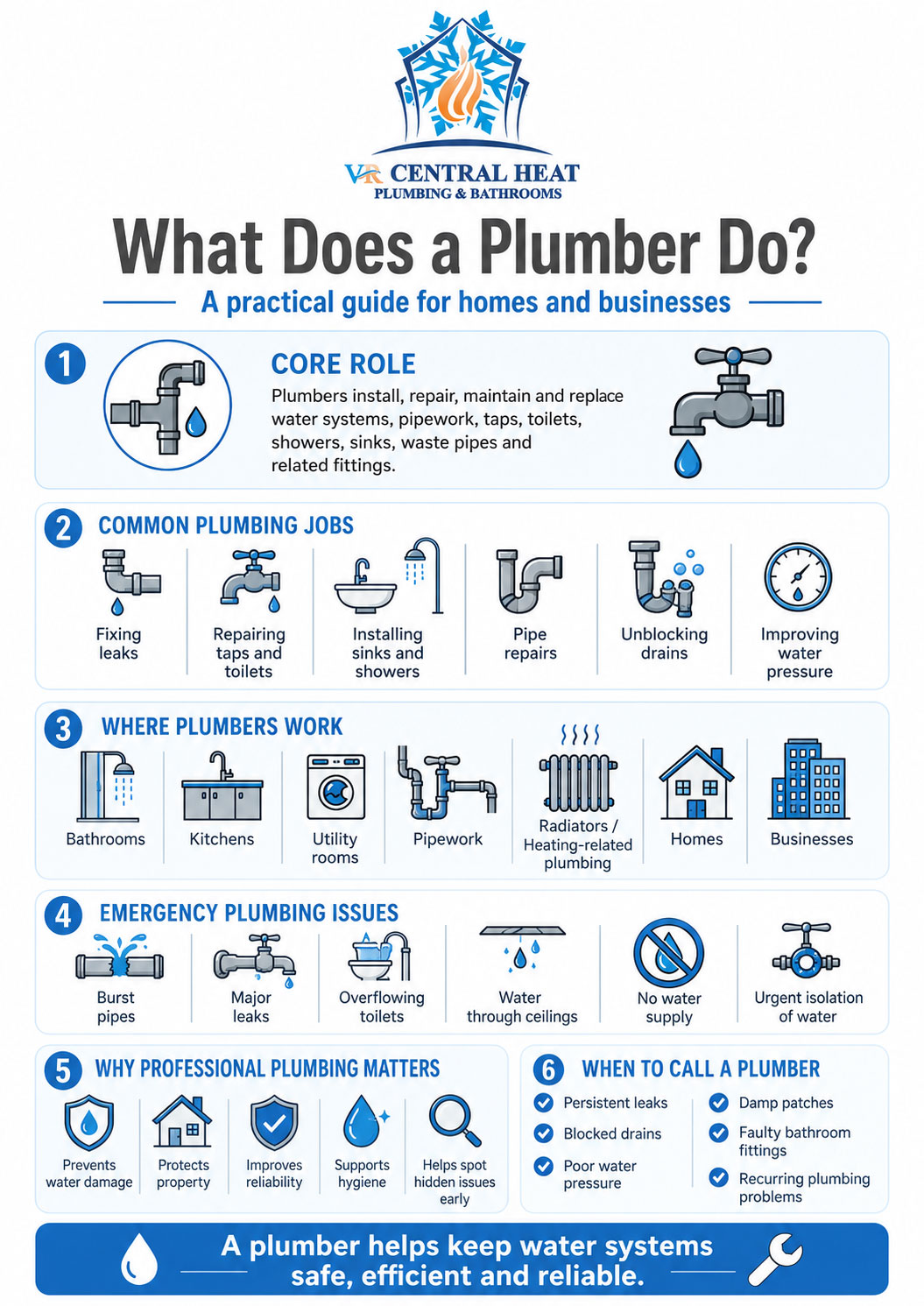 Click the infographic to view it larger
What a Plumber Does in Simple Terms
A plumber installs, repairs, maintains and replaces the systems that move water into, around and out of a building. This includes cold water pipes, hot water pipework, taps, toilets, showers, baths, basins, sinks, valves, waste pipes, overflow pipes and many appliance connections. In many homes, plumbers also work around heating pipework, radiators and cylinders, depending on the service required.
The role is both practical and diagnostic. A good plumber does not simply replace parts without understanding the issue. They inspect the problem, test likely causes, explain the options and carry out the repair or installation in a safe, tidy and suitable way for the property.
In London, plumbing work can be especially varied because properties range from modern flats and new-build apartments to Victorian terraces, older conversions, period homes, offices, shops and rental properties. Each property type can bring different pipe routes, access issues, water pressure concerns and maintenance needs.
- Repairs leaks, taps, toilets, showers and pipework
- Installs bathrooms, kitchens and appliance connections
- Diagnoses water pressure and drainage problems
- Maintains plumbing systems to prevent future damage
- Helps with urgent issues such as burst pipes
- Advises on practical improvements for older properties
Common Plumbing Repairs
Repair work is one of the most familiar parts of a plumber’s job. Everyday plumbing problems may appear small at first, but they can waste water, increase bills, damage surfaces and create stress if ignored. A dripping tap, for example, might need a washer, cartridge, valve or replacement fitting. A toilet that keeps running may involve the inlet valve, flush valve, float mechanism or internal seals.
Plumbers also repair leaks around sinks, baths, showers, isolation valves, pipe joints and appliance connections. Some leaks are obvious, while others only appear as damp patches, swollen skirting boards, peeling paint or stains on ceilings. The repair may involve tightening fittings, replacing seals, renewing pipe sections, changing valves or improving access for future maintenance.
A professional repair should not only stop the immediate problem; it should also reduce the chance of the same issue returning. This means checking water pressure, the condition of nearby fittings and whether the original installation is suitable.
Pipework and Water Supply Work
Pipework is central to plumbing. A plumber may install new pipes, repair damaged pipe sections, replace old or corroded pipework, fit isolation valves, improve pipe routes or connect new fixtures to the existing supply. Pipework can be made from different materials, including copper and approved plastic systems, depending on the application and property.
Water supply work may also involve pressure issues. If a shower is weak, taps run slowly or one area of the property has poor flow, a plumber can investigate possible causes. These may include partially closed valves, limescale, old pipework, restrictions, faulty fixtures or wider supply limitations.
In many London homes, pipework has been changed over many years by different tradespeople. A plumber may need to understand previous alterations before making improvements. This is particularly common in converted flats, older houses and properties where bathrooms or kitchens have been moved.
- Installing new hot and cold water pipework
- Replacing damaged or outdated pipe sections
- Fitting isolation valves for easier maintenance
- Improving pipe routes during refurbishments
- Investigating poor water pressure or flow
- Connecting sinks, baths, showers and appliances
Bathrooms, Kitchens and Appliance Connections
Plumbers play a major role in bathroom and kitchen work. In bathrooms, they may install or replace toilets, basins, baths, showers, shower valves, taps, wastes, traps and pipework. A bathroom installation needs careful planning because water supply, drainage, waterproofing, access and ventilation all affect long-term reliability.
In kitchens and utility rooms, plumbers commonly connect sinks, taps, dishwashers, washing machines, waste pipes and water feeds. They may also help during kitchen renovations by moving pipework, capping old connections, creating new appliance positions and checking that waste routes are practical.
Good plumbing in these rooms is not only about appearance. Poorly fitted waste pipes can cause odours or slow drainage. Badly sealed shower areas can lead to hidden leaks. Unsupported or awkward pipework can make future repairs more difficult. A plumber helps ensure that visible finishes are supported by reliable hidden services.
Blocked Drains, Waste Pipes and Slow Drainage
Plumbers are often called when sinks, baths, showers or toilets drain slowly or become blocked. A blockage may be caused by hair, soap residue, food waste, scale, wipes, sanitary products, grease or a problem further along the waste pipe. The correct solution depends on where the blockage is and what caused it.
For minor internal waste issues, a plumber may clear the trap, clean the waste connection, remove debris or adjust pipework with poor fall. For more serious external drainage problems, specialist drainage equipment may be needed. The important point is to avoid forcing harsh chemicals into a system without understanding the issue, as this may damage fittings or create safety risks.
Recurring blockages should always be investigated properly. If the same sink, shower or toilet keeps blocking, there may be a design issue, partial obstruction, poor pipe gradient or installation problem that needs correction.
| Plumbing Issue |
Possible Cause |
How a Plumber Helps |
| Slow bathroom sink |
Hair, soap, trap build-up or restricted waste pipe |
Cleans the trap, checks the waste route and restores flow |
| Blocked kitchen sink |
Grease, food debris or poor waste pipe layout |
Clears the blockage and checks pipework condition |
| Toilet not flushing properly |
Partial blockage, faulty flush or drainage restriction |
Identifies whether it is a toilet fault or waste issue |
| Bad smells from drains |
Dry traps, poor seals or waste pipe problems |
Checks traps, seals and ventilation of waste connections |
| Repeated blockages |
Poor pipe fall, hidden obstruction or wider drainage issue |
Investigates the cause rather than only clearing symptoms |
Leaks, Damp and Water Damage
Leak detection and repair are among the most important plumbing tasks. A leak can damage ceilings, flooring, plaster, cabinets and electrical areas if it is not dealt with quickly. Some leaks are immediate and visible, such as water spraying from a pipe. Others develop slowly behind tiles, under baths, inside cupboards or below floors.
A plumber will look for signs such as water stains, pressure loss, damp smells, swollen materials, mould growth, wet patches and noisy pipework. Depending on the situation, they may isolate part of the system, test fittings, inspect accessible areas and recommend the least disruptive repair route.
In rental properties, offices and busy family homes, quick action is especially important because water damage can spread beyond the original room. Even a small leak can become costly if it is left for weeks. Calling a plumber early can help limit damage and reduce disruption.
- Dripping ceilings or damp patches
- Wet flooring around bathrooms or kitchens
- Water stains below baths, showers or toilets
- Leaking pipe joints or isolation valves
- Hidden leaks behind panels or cupboards
- Repeated pressure loss linked to water escape
Heating-Related Plumbing Work
Plumbing and heating are closely connected in many UK properties. While gas work must only be carried out by a Gas Safe registered engineer, plumbers and heating engineers often deal with pipework, radiators, valves, cylinders and circulation problems that affect central heating performance.
Heating-related plumbing work may include fitting or replacing radiators, repairing radiator valves, dealing with leaks on heating pipework, balancing radiators, checking circulation and helping diagnose why certain rooms are not heating properly. A cold radiator does not always mean the boiler is faulty; the cause may be trapped air, sludge, a closed valve or poor circulation.
In homes with hot water cylinders, plumbers may also work around associated pipework, valves and controls, depending on the system and qualification required. Because heating systems involve pressure, heat and sometimes gas appliances, the correct professional should always be used for the specific task.
Domestic and Commercial Plumbing
Plumbers work in both domestic and commercial settings. Domestic plumbing usually involves homes, flats, rental properties and small residential blocks. Commercial plumbing can involve offices, shops, salons, restaurants, clinics, schools, managed buildings and other workplaces.
The basic principles are similar, but commercial plumbing may involve heavier usage, more fixtures, stricter access arrangements, planned maintenance and a greater need to minimise downtime. A leaking toilet in a home is inconvenient; in a business, it can affect customers, staff, compliance and daily operations.
Landlords and property managers often rely on plumbers for responsive repairs, pre-tenancy checks, bathroom maintenance, leak prevention and support between occupancies. Regular maintenance can be especially valuable in properties where tenants may not report small issues until they become serious.
- Home plumbing repairs and installations
- Rental property maintenance
- Office and workplace plumbing support
- Shop, salon and small business plumbing
- Landlord and property manager call-outs
- Planned maintenance to reduce disruption
Emergency Plumbing Situations
Some plumbing issues can wait for a scheduled appointment, but others need urgent attention. A burst pipe, major leak, overflowing toilet, water coming through a ceiling or loss of essential water supply may require fast action. The first step is often to turn off the water at the stopcock or isolation valve if it is safe to do so.
An emergency plumber aims to make the situation safe, stop or control the water escape and prevent further damage. The first visit may involve a temporary repair if a permanent fix requires parts, access work or follow-up investigation. In many cases, stopping the immediate leak is the priority before full reinstatement.
Homeowners should know where the main stopcock is located before an emergency happens. In flats, the arrangement can vary, and some valves may be in communal areas, cupboards or service risers. Knowing how to isolate water quickly can make a major difference.
- Burst pipes or sudden major leaks
- Water coming through ceilings
- Overflowing toilets or blocked waste systems
- No water supply inside the property
- Leaks near electrical fittings or appliances
- Uncontrolled water escape from tanks or pipework
Choosing the Right Plumber
Choosing the right plumber is about more than finding someone available quickly. A reliable plumber should communicate clearly, explain what they are doing, respect the property, use suitable materials and be honest about whether a repair or replacement is the better option.
For more complex work, ask what is included, whether parts are supplied, how access will be managed and whether any follow-up may be needed. For gas-related work, always check that the engineer is Gas Safe registered for the type of gas appliance or fitting involved. For water supply work, using a suitably trained plumber helps protect drinking water quality and installation standards.
A professional plumber should also understand that London properties often present practical challenges, including parking, access, older pipework, converted layouts and hidden services. Good planning helps reduce disruption and makes the work smoother for everyone involved.
Whether you need tap repairs, toilet repairs, leak investigation, bathroom plumbing, kitchen connections, radiator pipework or Trusted Plumbing Services for Homes & Businesses, choosing a skilled team helps protect your property and improve long-term reliability. VR Central Heat provides Reliable Plumbing and Heating Solutions in London for customers who want practical advice, careful workmanship and dependable support when plumbing problems appear.
Need a Plumber in London?
VR Central Heat provides professional plumbing and heating support for London homes, landlords and businesses, including leak repairs, bathroom plumbing, pipework, radiator issues and urgent call-outs.
Book trusted plumbing support for a safer, more reliable property.