Plumbing problems can happen suddenly, but not every fault needs an immediate callout. The challenge for many London homeowners, landlords and tenants is knowing when a leak, blockage or boiler-related issue is serious enough to need urgent help. Working with Reliable Plumbing and Heating Solutions in London gives you access to professional support when a fault could cause water damage, safety risks or major disruption to your home.
An emergency plumbing issue is usually one that cannot safely wait until a normal appointment. It may involve uncontrolled water, loss of essential facilities, risk to electrics, damage to walls or ceilings, or a problem that affects heating and hot water. In London properties, especially older houses, converted flats and busy rental homes, a small plumbing fault can quickly become expensive if it is ignored.
This guide explains when you should call an emergency plumber, what warning signs matter most, what to do before help arrives and how to reduce the risk of repeat plumbing emergencies.
Emergency Plumbing Infographic Guide
This quick visual guide highlights the most common situations where a plumbing issue should be treated as urgent, especially in London homes and rental properties.
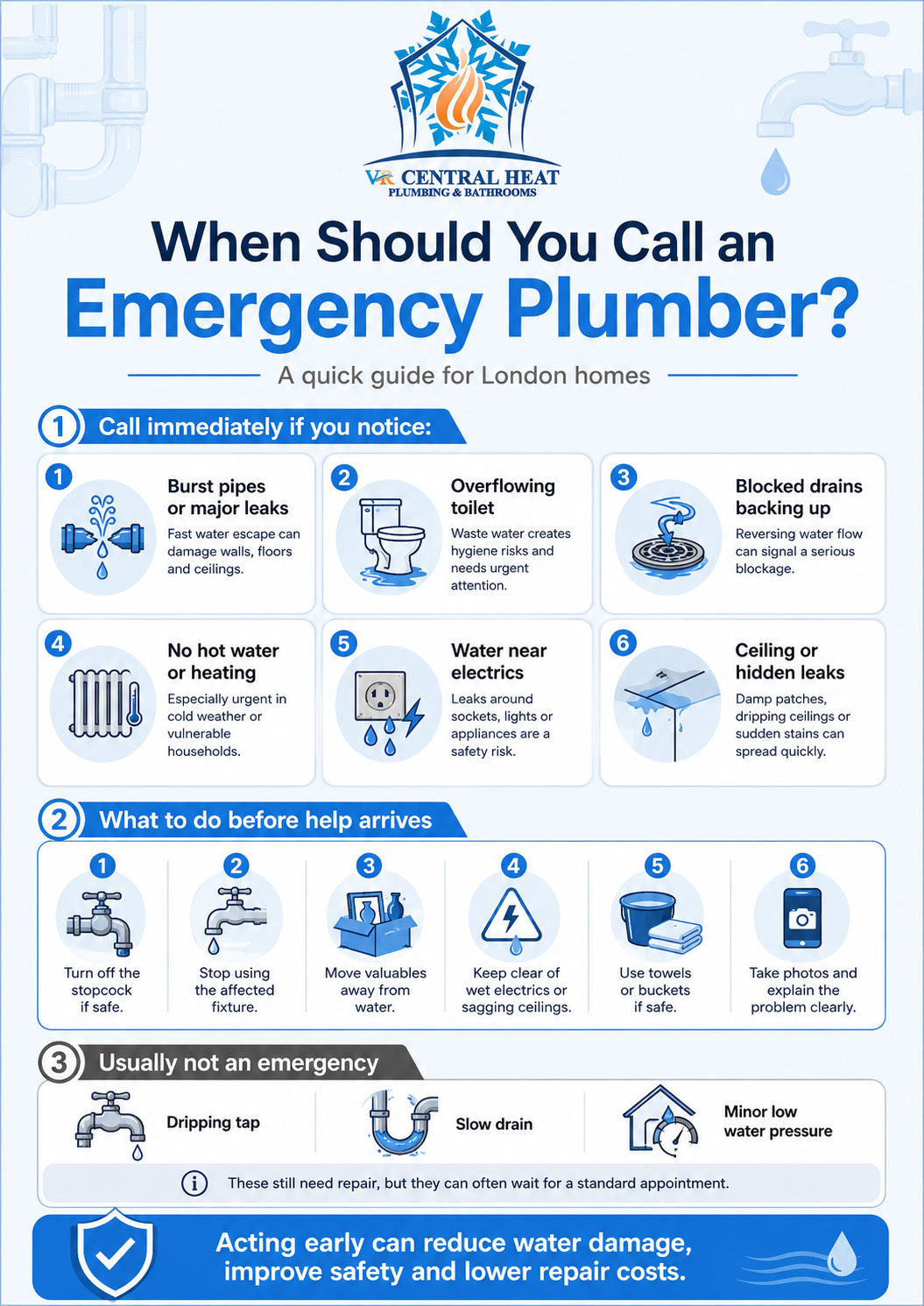 Click the infographic to enlarge
What Counts as a Plumbing Emergency?
A plumbing emergency is any situation where waiting could cause serious damage, leave your property without essential water or heating, or create a safety concern. The issue does not always have to look dramatic. Sometimes a slow ceiling leak, a blocked toilet in a one-bathroom flat, or water near electrical fittings can be urgent because of what may happen next.
In London, plumbing emergencies are often linked to high water pressure, older pipework, ageing boilers, shared drainage systems, compact flats and busy households. A minor fault can spread quickly through ceilings, floors, cupboards and neighbouring properties. If you are in a flat, escaping water may also affect the property below, making fast action even more important.
You should consider calling an Emergency Plumber in London when the problem is active, spreading, unsafe or stopping you from using essential facilities. If you are unsure, it is usually better to get professional advice early rather than waiting until the damage becomes visible.
- Water is escaping and cannot be controlled
- A ceiling, wall or floor is becoming wet
- A toilet is overflowing or unusable
- There is no hot water in a vulnerable household
- Water is close to sockets, lights or appliances
- The issue could affect another flat or property
Burst Pipes and Major Leaks
A burst pipe is one of the clearest reasons to call an emergency plumber. Water can spread fast, especially if the burst happens behind a wall, under a floor, in a loft space or close to a boiler. Even a small pipe split can release enough water to damage plaster, timber, flooring, cupboards and electrical systems.
Signs of a serious leak include dripping ceilings, bubbling paint, sudden damp patches, hissing pipework, low water pressure, water running from a cupboard, or unexplained sounds behind walls. If the leak is active, you should turn off the internal stopcock if you can do so safely. In many homes, this is under the kitchen sink, in a utility cupboard or near the front entrance.
Do not wait for the leak to become worse before taking action. Water damage is often more expensive than the plumbing repair itself. Emergency attendance can help isolate the fault, stop the water, repair damaged pipework and advise whether further drying or follow-up work is needed.
Blocked Toilets, Sinks and Drains
A blockage can be inconvenient, but it becomes an emergency when waste water is backing up, a toilet is overflowing, there is only one toilet in the property, or drainage smells suggest a deeper issue. In flats and shared buildings, drainage problems can also affect neighbours, so fast action can prevent a wider problem.
Blocked toilets should be treated carefully. Repeated flushing can make the overflow worse. If the water level is rising, stop using the toilet and avoid adding chemicals, especially if you have already used another product. Chemical cleaners can be dangerous for the plumber and may damage older pipework.
Kitchen sink blockages can also become urgent when water will not drain, appliances are backing up, or waste water is leaking below the sink. Grease, food waste, scale, soap residue and poor pipe falls can all contribute. A professional plumber can clear the blockage safely and check whether the problem is local or part of a wider drainage fault.
- Stop flushing an overflowing toilet
- Avoid mixing drain chemicals
- Do not keep using a blocked sink
- Check whether nearby drains are affected
- Keep children and pets away from waste water
- Call quickly if the property has only one toilet
No Hot Water or Heating
Loss of hot water or heating is not always a plumbing emergency, but it can become urgent depending on the household, the season and the cause. If there are elderly residents, young children, vulnerable people or medical needs in the property, a heating or hot water failure should be treated more seriously.
Sometimes the issue is linked to water pressure, pipework, valves, radiators, controls or boiler-related faults. If you notice leaking around the boiler, water pressure dropping repeatedly, unusual noises, cold radiators, or no hot water at all, it is sensible to get professional help rather than repeatedly resetting the system.
For safety, do not open boiler casing or attempt gas-related repairs yourself. If you smell gas, leave the property, avoid switches and flames, and contact the relevant emergency gas service immediately. For plumbing-related hot water and heating faults, a professional can assess the issue and advise the safest next step.
Leaks Near Electrics
Any leak close to sockets, light fittings, fuse boards, electrical appliances or ceiling lights should be treated as urgent. Water and electricity are a serious risk together. Even if the leak looks small, water can travel along joists, cables and ceiling voids before appearing in another part of the room.
If water is dripping through a light fitting or near electrical equipment, do not touch the fitting. If it is safe to do so, turn off the affected electrical circuit or the mains electricity supply. If you are unsure, keep away from the area and seek professional support.
An emergency plumber can stop the water source, but electrical safety may also need to be checked by a qualified electrician. The most important step is to prevent further water escape and keep people away from the affected area until it has been made safe.
What to Do Before a Plumber Arrives
Taking the right steps before an emergency plumber arrives can reduce damage and make the repair easier. First, stay calm and identify whether water is still escaping. If it is, turn off the internal stopcock if you know where it is and can reach it safely. For appliance leaks, such as washing machines or dishwashers, turn off the local isolation valve if available.
Move valuables, furniture and electrical items away from the affected area. Use towels or buckets to contain water where possible, but do not take risks with ceilings, electrics or contaminated waste water. If water is coming through a ceiling, avoid standing directly underneath it, as plasterboard can weaken.
Take photos of the damage for your own records, especially if you may need to contact your insurer or landlord. When speaking to the plumber, explain what has happened, where the stopcock is, whether the leak is active and whether heating, hot water, toilets or electrics are affected.
- Turn off the stopcock if safe
- Use isolation valves for leaking appliances
- Move electrical items away from water
- Keep away from wet ceilings or fittings
- Take clear photos of the affected area
- Give the plumber accurate details by phone
Emergency vs Non-Emergency Plumbing Issues
Some plumbing problems are annoying but can usually wait for a scheduled appointment. Others need same-day attention. The difference often depends on whether the issue is active, damaging, unsafe or stopping essential use of the property.
| Plumbing Issue |
Emergency? |
Why It Matters |
| Burst pipe or uncontrolled leak |
Yes |
Water damage can spread quickly through walls, floors and ceilings. |
| Overflowing toilet |
Yes |
Waste water can create hygiene risks and damage flooring. |
| Slow dripping tap |
Usually no |
It should be repaired, but it is not normally urgent unless severe. |
| No hot water |
Sometimes |
It may be urgent for vulnerable households or during cold weather. |
| Blocked kitchen sink |
Sometimes |
Urgency depends on backing up, leaking or whether facilities are unusable. |
| Water near electrics |
Yes |
There may be a serious electrical safety risk. |
If the problem is not causing immediate damage or safety concerns, a normal plumbing appointment may be suitable. However, if water is spreading, essential facilities are not working, or there is any risk to people or property, emergency help is the safer choice.
How to Prevent Future Plumbing Emergencies
Not every emergency can be avoided, but regular maintenance can reduce the risk. Many urgent plumbing problems begin as small warning signs: a slow drain, a dripping connection, a noisy pipe, a boiler pressure fault, a loose tap, poor sealant or damp marks under a sink.
Check visible pipework regularly, especially under sinks, around toilets, near boilers and close to washing machines or dishwashers. Replace worn hoses, repair small leaks early and avoid putting grease, wipes, cotton pads or food waste into drains. In colder weather, exposed pipework should be protected from freezing where possible.
Landlords and homeowners should also keep a record of maintenance, repairs and inspections. For rental properties, fast attention to plumbing faults can protect tenants, reduce complaints and prevent minor issues becoming costly property damage.
- Fix small leaks before they spread
- Keep drains clear of grease and wipes
- Know where the stopcock is located
- Check appliance hoses and isolation valves
- Look for damp patches or staining
- Book maintenance when warning signs appear
Final Advice for London Homes
The right time to call an emergency plumber is when the problem could cause damage, affect safety or stop essential facilities from working. Burst pipes, uncontrolled leaks, overflowing toilets, blocked drains, water near electrics and urgent hot water problems should not be ignored.
For London properties, speed matters. Flats, terraces and older homes can suffer hidden water damage quickly, and plumbing issues may affect neighbouring properties. Acting early can reduce repair costs, protect your home and restore normal use sooner.
If you need urgent help, Emergency Plumbing Services – 24/7 Rapid Response can support you when a plumbing issue cannot wait. For wider plumbing, heating and property comfort needs, VR Central Heat provides Reliable Plumbing and Heating Solutions in London for homes, landlords and businesses across the capital.
Need an Emergency Plumber in London?
If you have a burst pipe, leak, blocked toilet, drainage problem or urgent hot water issue, professional support can help prevent further damage and restore your property safely.
Book Emergency Plumbing Support